Showing posts with label irfan khan. Show all posts

Sunday, October 4, 2015

Mini reviews: the Films I Actually Liked Edition.


NH10 - I went in not knowing much about this one beyond the initial premise of an urban couple getting mixed up in rural violent disputes along the highway. I also probably won't ever go back to this one, such a brutal watch it was, but this one really nailed so many things I didn't expect it to. Anushka Sharma delivered a career-great (or career upper echelon but hopefully not the best we get to see out of her yet) performance. The mood was fantastic throughout, capturing the terror and the panic and the constant threat of violence looming over. The soundtrack underscores the mood, and the milieu is perfect for it, too. Enjoyable, but tough, precisely because of how real it feels.


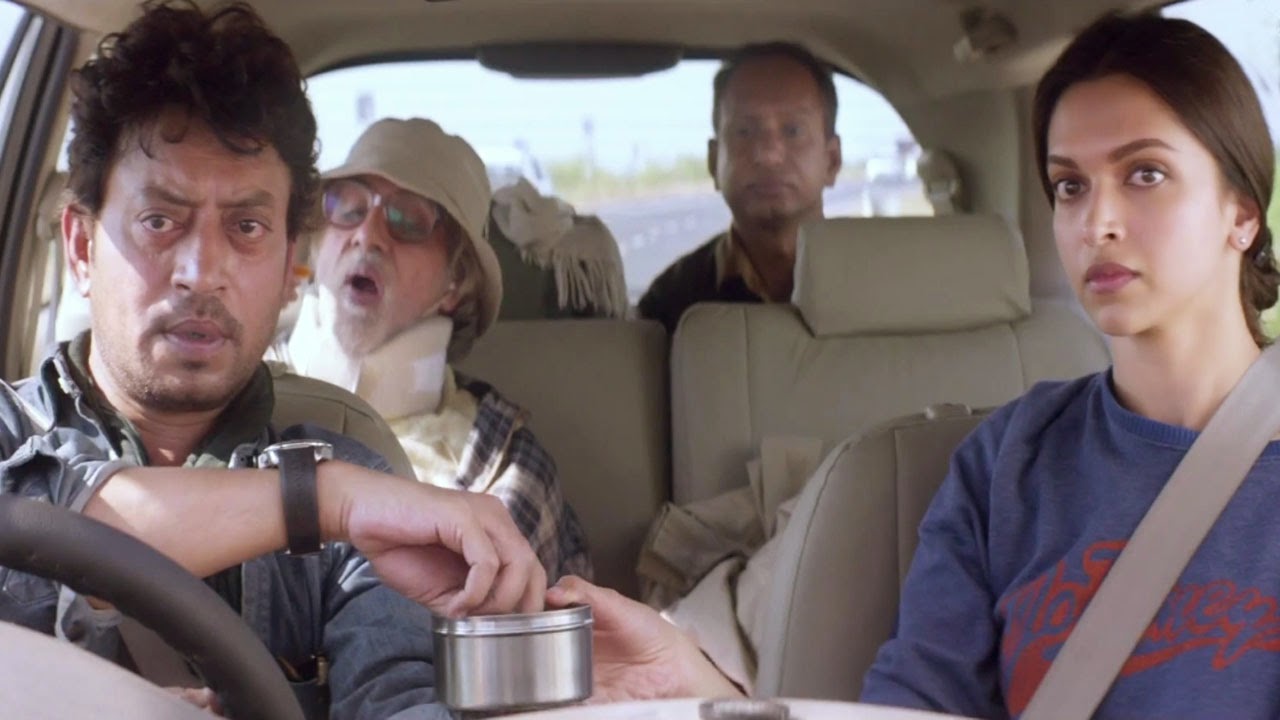
Piku - This tale of bowel movement and road trip and family bonding and tentative romance feels like precisely the worst kind of "quirky" film you could imagine, and yet it's one I'll probably find myself recommending the most. The strength of the script, that immediately allows you to feel at home with these characters, added to the strength of the performances (Deepika has probably been this good before, and even so this feels special) simply makes Piku a delight. I just sat there, watching it, being awed and delighted by its world and its humour. Amitabh and Irffan are fantastic here, as well, but their value has been demonstrated before, whereas Deepika Padukone is making great strides as of late. I love that this was a hit.


Sunrise (2014) - A French-Indian co-production was one that I felt safe taking my Bollywood-hating friend to, as the whole thing clocked in around 90 minutes of running time and did not seem like your standard crime fare. Adil Hussain leads in this noir indie where rain is a constant and the narrative dips in and out of reality as we follow the cop Joshi chase shadows on the streets of Mumbai as multiple children are turning up dead. A sort of b-plot follows a group of dance girls in a heart-breaking portrayal of the underworld. I don't particularly want to get too deep into everything that happens, as the film (directed by Partho Sen-Gupta) is so small in scale and its objectives that it's best viewed without knowing too much. I saw it at a festival, so I don't know how widely it's been released yet, but worth looking out for.


Detective Byomkesh Bakshy - Sushant Singh Rajput had impressed me so little in his previous films that the poor man did not even have a tag on this here blog, following his debut in Kai Po Che and his second film Desi Shuddh Romance (which I hated). But with this Hindi adaptation of the famous Bengali detective novels, he's arrived in a big way, both to my graces and in the industry in general. I loved this Dibakar Banerjee film, in its 1940's Kolkatta milieu and noir style cinematography, the story in all its twists and turns and fantastic supporting cast. And that rocking soundtrack, by god. This might not end up being my favourite of 2015 but it'll probably at the very least crack top five, and I look forward to any possible sequels,

Saturday, May 10, 2014

The Lunchbox and the argument for self-reflection.


The pointlessness of consumption starts to hit home when the DVDs you've hauled from half-way across the globe gather dust as you're so preoccupied with life and other interests that you've got. Believe you me, I don't mean to abandon Indian movies without much warning every 18 months or so - it just happens. And then I rush back in, flushed with new-found excitement. The love is always there, in a way, even when the blog is dead and the DVD player abandoned. I just get so tired, tired with the mediocrity, tired with the dullness of the Bengali art picture I'm forcing myself to sit through just because, tired of waiting for DVDs to come out, tired of the vapid jokes made on Koffee with Karan. So I leave, and then I come back.

I should have, of course, returned much earlier, as the brilliant Dabba (or The Lunchbox, as it's so widely known internationally now) arrived in Finnish cinemas a little over a month ago. I always wanted to see it, and I don't even feel like the film suffered from praise overload. It is a darling film, full of little flavors and notes to pick up on, well-directed and written, and with captivating performances and gentle comedic touches. It's got Irrfan Khan, ambassador of Indian acting to the western world, and Nawazuddin Siddiqui, the new can-do-no-wrong actor, and Nimrat Kaur, a shockingly fantastic newer find.

It's hard to disagree that this should've been India's Oscar hopeful, as even if you find the film bland and overrated, its gentle love story, culture-specific setting (the dabbawallahs' uncharacteristic mistake setting the scene for the exchange of letters), its feel-good vibes and lack of songs included, would have made it the perfect film for that particular audience. Even a month after its initial release, the screening on an early evening was weirdly full - this film is catching considerable word of mouth even in my northern corner of the globe, and I have no doubt Oscar buzz would've helped this along further. But just as well, and I'm happy it's getting such wide international recognition, even without being pitched to the Academy.


So it's a good film, and a joy to sit through, but what I found most important about the film was that it really made me reflect on life. As most good love stories, the one in Dabba is ultimately about something greater than the connection between two people. Saajan (Irrfan) and Ila (Nimrat Kaur) are tiptoeing into a connection with their exchanged messages, and as with any two unhappy people who connect over their unhappiness, their exchanges soon become about their lives itself - what they want, what they don't want, and what they can expect from the future. It's only natural that the viewer also finds themselves asking similar questions - especially if they're relatively young, or with their life in flux, or going through a rough time, or even if they're older, like Saajan, and looking back on their past experiences.

I found myself wondering all of these things, and then arguing with myself - maybe these questions aren't really as tough as one might, in their bourgeois angst, think. After all, endless pondering about life and ourselves, our direction or our happiness, can put a person in a state of utter confusion, that can be only medicated by being marketed self-help in form of books and life style magazines and co-opted philosophies. The Lunchbox seems to also posit that this self-reflection can be rather middle class. Do the dabbawallahs themselves ponder these things? Maybe, but maybe they move on quicker than some of us. There is, in essence, much common sense in the character of Shaikh (Siddiqui), whose description of an ordinary day, full of work but also of little joys, really hit home for me. In a complicated world, simplicity can be the greatest treasure of all, even as I roll my eyes at what a cliché that sounds like. Pessimism remains my affliction.

Such is the beauty of cinema, and of all stories, really. They inspire us to see beyond what is just on the page, and consider ourselves in reflection to the characters. It's not that a film has to be deep to inspire such thoughts, it merely has to be compelling and believable as a story. And while I can't say The Lunchbox became an instant all-time favourite, I appreciate it because it certainly inspired me in many ways, and that's so much more than most films manage to do.

Tuesday, March 9, 2010

Aaja Naachle - fluff at its most glorious.

In my understanding Aaja Naachle (2007) did not do great in the box office. People found the story cliché and shoddy in execution. Just as well. While it doesn't bring much to the table in terms of substance, I can't begrudge the movie, it just delivers entertainment of the glossy, vibrant and fluffy variety.

The fact is, the film only really begins around 30 minutes in. The preamble of Diya (Madhuri Dixit) dancing at a New York studio, moving like it's Dil To Pagal Hai, then finding out her guru is dead, then the backstory of her meeting an American guy (clearly from the male model school of non-acting) and moving to his country to the shame of her family.. All of this is pretty much boring and clichéd to the absolute max. Diya's kid is annoying and she clearly hasn't taught two things about her past to her own child (wtf?!) and the fact her divorce to Mr Americano was almost as soon as her plane landed in the US is bizarrely simplistic (apart from you know, white guy, foreigner, bad, bad, grr!).

Enter this guy, who is the villain in the loosest possible meaning of the word. And I assure you, this isn't just my blatant Akshaye fangirlism speaking, because the fact is, without dramatic tension there is no movie, and his character is the one who brings some to this incredibly fluffy piece. He wants to tear down the unused theater and Diya isn't keen of the fact, and so they make a deal - if she can put on a show full of locals to revive the culture scene of her village, he won't tear down the amphitheater. (More about this guy during Khanna Week in May - for now this paragraph will suffice.)

And here's where Aaja Naachle finally kickstarts, as Diya begins seeking out local talent, which is why we get a cavalcade of awesome side characters, all with their fluffy little existences, coming together for some musical magic.

Ranvir Shorey is Diya's left-behind former fiancee, still tragically in love with her.

Vinay Pathak as a civil servant wanting to impress his theater-loving wife.

Divya Dutta as Diya's former best friend and Irffan Khan as her businessminded husband (and "villain" number two).

Konkona Sen Sharma as the adorable tomboy fiercely crushing Kunal Kapoor's boy-next-door/goonda (but goonda only in the fluffiest manner).

And it's really just so entertaining and fluffy and glossy and fun, that the flaws of the beginning mysteriously begin to melt away.

What with all the colours and the fun and the dancing..

Oh the glorious dancing!

Could they have made a better movie out of this? Sure. There's a lot of untapped potential here for substance, perhaps kind of sadly so. The way Akshaye's character questions Diya's status as a current NRI coming to "save" a bit of India and damaging what he sees as progress while doing it is countered by her questioning his own foreign education (she was educated in India) being used to also "fix" India as he sees fit. But this angle of the story isn't explored beyond the initial touch.

The way Konkona's tomboy transforms into a beautiful young woman could've emphasized how changing how she dresses doesn't change who she is, and who he, in the end, is falling in love with.

But you know, minor quips. Focus on the fun, and there's plenty of it here.

Fun times, gorgeous Madhuri.

It's like, why bother hating?

You want colour, fun and warm fuzzies? Watch Aaja Naachle. You want something heavy and thought-provoking? Read a book.

Just telling it like it is..

Sunday, September 20, 2009

Billu (Barber), and the celebration of the ordinary.

Priyadarshan's an odd creature. His mindless cash-grab comedies, his shameless Southie remakes, his slightly more shameful Hollywood ripoffs, and the fact he once flat out admitted he doesn't make Hindi films for the art, but for the money, none of these things support my faith in him as a director. Sloppy is the first thing that comes to mind; passionless, perhaps.

Yet, when I watched Billu, I thought that maybe, just maybe, he was finally putting forth an effort towards a result that he cared about.

Of course, the story of a humble barber (Irffan Khan) and a superstar (Shahrukh Khan), has been told in other Indian languages before this version. I haven't seen any of the others, so I can't judge, but as with these stories that have trickled down (or up, I should say) from the Southie industries to the north, I always have this feeling in the back of my head the originals probably were better or simply more earnest.

Not that I didn't like it; as many others have said before me, Irffan wins you over as Billu and carries the movie with his warm exterior, ordinary problems and funny oneliners. Lara Dutta is fun, though pretty unfit for the unglamorous role of Bindiya, Billu's wife. The usual Priyadarshan comedy all-star team has their bits, some of them unnecessary and too long in scenes, and some of them genuinely funny.

To up the box office appeal, I suppose, Shahrukh has about twenty million item numbers (okay, there were three but still felt like one too many!) and not much else to do, and so he does what he does, projecting himself into the all-too-fitting role. The outcome works, and why wouldn't it?

I may sound completely unenthusiastic but the fact of the matter is, this movie is just fine. In fact, it's probably one of the best I've seen by this director. Still, if I was to ever use the label "timepass" (which I am still happily boycotting), this movie would one I'd use it with.

Saturday, March 28, 2009

Slumdog Millionaire and escaping the reality.

First of all apologies for the lengthy silence. It's one of those points in time for me when it's difficult to work up excitement over all things Indian cinema related. Everything exciting is coming out close to the end of this year, and I'm never in the mood for anything in my large pile of DVD's-to-watch. I haven't seen a single 2009 movie yet. It's odd.

But let's talk about what I have seen, specifically that little movie that won the Best Picture Oscar.

Slumdog Millionaire is a quizzical - pun unintended - piece of cinema. It weaves together the realism of violence and misfortune of the streets, gangsters, religious zealots and orphaned child beggars, with the dreamy escapism of Bollywood films, love conquering all obstacles and the idea of fate, 'kismet'. You could argue that because of this, it portrays Mumbai or Bombay perfectly, the two sides of the city both brought on display. At the same time, for this particular viewer at least, it created a strange discord - I didn't know how to allow the movie the benefits of both styles, how to reconcile the illogical parts with the ones that made more realistic sense.

You must all know the story by now. Jamal Malik (Dev Patel, who I previously loved in the UK television series Skins) is a kid raised in the slums and out on the road, who ends up on the game show Who Wants to be a Millionaire?, hosted by Prem (Anil Kapoor), and against all odds, knows the answers - simply because he does. Accused of cheating, he is forced to relay his life story to a police man (Irrfan Khan), a tale of misfortune but also of success, and of his search for his childhood love, Latika (Freida Pinto).

It feels a bit silly to critisize the movie for things I felt were unrealistic, in a way that quite bothered me, because for one, I did truly enjoy the movie. It was powerful and had a lot of great elements coming together effortlessly. Then, for two, who am I to say what is and isn't realistic? Despite my long interest in India and my knowledge of it, I'm oh so far from all-knowing on the subject. And yet -- would slum kids truly learn such fluent English while being out on the streets (or on the rails, as it were)? Would they ever, later in life, converse fully in English? These are small complaints but they threw me off all the same. It's odd how I could easily suspend my belief on the existence of fate, but not these smaller things.

The film is nicely paced, and especially the scenes with the children actors - first very young and later slightly older - were fantastic. As Jamal matures, Dev Patel carries the role splendidly, but the adult Latika, played by Freida Pinto, is sadly not as convincing. This made me lose interest in their love story just the tiniest. If Freida did have the chops to pull off the role, it felt like she was not giving her fullest and was more of a pretty face than anything else. The other actors, such as Anil and Irrfan, are as solid as one could expect - the layers in Anil's Prem were a pleasant surprise for me. The sound design and music overall deserved the Oscars they received, punctuating scenes fantastically. The song-and-dance, which is surely not a spoiler at this point, is not up to Bollywood standards (the choreography is partly fine, partly reminds me of cheesy 90's Hindi films) but if nothing else, allows the film to end on a high note and was not as bad as I initially expected.

I think it's wonderful that Slumdog has gotten the success and publicity it has and that India, too, has embraced the film as if its own. I'm glad to have seen it and enjoyed it - even though it doesn't quite make any of my favourites lists.